
“Wim Wenders Landscapes. Photographs. 4 REAL & TRUE 2”
~迷路に飛び込んだような写真展~
今年ドイツのベルリン国際映画祭で名誉金熊賞を受賞し、『大都会のアリス』『パリ、テキサス』『ベルリン•天使の詩』そして最近バンクーバーで公開された『The Salt of the Earth』など数多くの作品で知られるヴィム•ヴェンダース監督。テーマもなくどこに行き着くか予測ができない監督の映画にファンが多く、不思議な癒し効果もあるといわれている。
「写真」が語る「存在」
ヴェンダース監督は今年8月に70歳の誕生日を迎える。出生地であるドイツ•デュッセルドルフでは彼の誕生記念を祝う写真展がオープン。彼の写真展は1986年に始まり、2006年には小津安二郎監督のロケ地である『尾道への旅』が日本で開催された。「人生の半分は写真」と称する彼のこれまでに温めていた写真80点が一挙にこれまでにない大型フレームで公開された。映画は現実に近づけるため3Dなど特殊技術を使う監督。しかし写真はシンプルなアナログカメラで、ライトや三脚を一切使わないというこだわりがある。「新しい土地に迷い込んだ時、まるでレーダーで導かれるかのように静かで変わった場所に遭遇する」「写真は『今だけ』そこにあるものを見せてくれる」と話す監督が、世界中で撮った写真を披露する。ゆったりとしたスペースで、3D迷路のように行き止まりが何箇所も設けられたデュッセルドルフのクンストパラスト(Museum Kunstpalast)は、そんな彼にぴったりの美術館である。
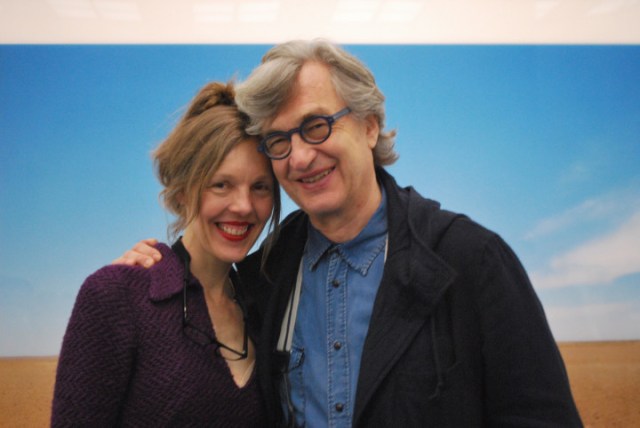
早朝入館するとそこには彼のパートナーで写真家であるドナータ(Donata)夫人が念入りにライトの調整をしていた。ヴェンダース監督の写真展には必ず彼女の姿がある。そして監督も来館者に混じって静かに鑑賞していた。人並み以上のオーラがあるのであっという間に見つかってしまう。照れ笑いしながら写真撮影に応じてまた移動する。そんな気さくな一面もある。
監督と日本
ヴィム•ヴェンダース監督というと映画『東京画』を思い浮かべる人が多いだろう。彼のおかげで小津安二郎監督を知ったという世代は世界中にいる。2011年の秋に福島を訪れた監督は「どこにいても福島を思い出さない日はなかった」と話した。展示されていた3点の写真はどれも色があせて不思議な正弦波がついている。「見ただろう? あれは持ち帰ったフィルムの写真全てについていた。僕が後でつけたのではないよ」と説明しながら、「目に見えない放射線がついに正体を出した」とも語った。福島の写真の真正面には奈良の竹林から光がきらめく写真が目をひく。監督が静かにカメラを固定する手に蚊の群れがおりてきて「レンズの前に来るな」と願いながら撮った作品だそうだ。
「悲惨な出来事を記憶から抜きとれないなら、この目で見て、その辛さを自分も背負う」。普段からそう話している監督は福島以外にもニューヨークやエルサレムの被災地へ足を運んでいる。しかし、今回展示されている写真は悲惨さや悲しみを訴えるのではなく、優しい光があり、監督の愛情が注がれているようなものばかりだった。そして会場を大きく占めるのはおなじみの小津映画の舞台となった広島県尾道(おのみち)市の写真8点。「小津監督の映画には人生のメランコリーが全て含まれている。東京物語が多分僕自身の映画史の中で一番好きな映画だと思う。あれだよ(指をさして)、尾道。僕はどうしても自分の目で見たかったんだ。」と語ってくれた。「失われた楽園の領土」と監督がよぶ尾道では「夜歩きながら聖地に着いた気持ちになった」そうだ。
ヴェンダース映画に出てくる風景を再び写真で見る。今まで見たことがないほど大きな写真の真中に立つと、目の前にその風景が広がる。まるで監督の横で一緒に見ているかのようだ。彼は何も言わないし、自分も何も言わない。そんな静かな雰囲気が味わえる素晴らしい個展だった。
写真展は8月16日まで開催中。監督のトークイベントやカタログ購入の情報は:www.smkp.de まで。
English version:
“Wim Wenders Landscapes. Photographs. 4 REAL & TRUE 2”
~Feels Like Jumping Into The Maze~
Director Wim Wenders was awarded an Honorary Golden Bear Award at the Berlin International Film Festival in Germany this year, and is very well-known for great movies such as “Alice in the Cities,” “Paris, Texas”, “Wings of Desire” and “The Salt of the Earth” which premiered recently in Vancouver, Canada. Because Wim Wenders’ movies often have no particular themes and one cannot predict where the stories end up, fans love them and feel a certain healing effect.
“Photographs” Tell “Existence”
Director Wenders will celebrate his 70th birthday this August. To celebrate his birthday in Dusseldorf where he was born, his photography exhibition is being organized. He began his photo exhibition in 1986, and held the exhibition “Journey to Onomichi”, the location of Ozu’s movies, in Japan in 2006. “Half of my life is photography” the director claims and shows 80 of his special photographs in very large frames like we have never seen. Director Wenders often uses the most high technology such as 3D to make realistic movies. However, in his photography he uses simple analog cameras, and has a policy not to use lights and tripods. “When you’ve wandered into a new land, you encounter a very quiet and unusual place, as if you are somehow guided by a radar” “Photographs show me what exists just now” and he presents the special photos from all over the world. The spacious Museum Kunstpalast in Dusseldorf is like a 3D maze and has several dead ends to be a perfect museum for Director Wenders.
When I entered the museum in early morning, I saw Mrs. Donata Wenders, a photographer, work partner, and his wife, who had been adjusting lights carefully. She will certainly be there for him in all his photo exhibitions. He himself was also appreciating his work quietly among visitors. Because of his ‘more than a person’ aura, it did not take too long to be noticed and soon he was surrounded by photographers. He smiled and posed to the requests. You feel the presence of a very friendly person.
Director Wenders and Japan
When you hear the name Director Wim Wenders, many of us think of the movie “Tokyo-Ga.” Thanks to him, there are many generations of people all over the world who know the name Director Yasujiro Ozu today. Director Wenders visited Fukushima in the fall of 2011 and said, “there was no single day that I did not think of it.” There were three photographs of Fukushima and each one of them had a mysterious faded sine wave. While he was explaining this, he asked, “Did you see that? The waves were attached in all negatives I brought back from Fukushima. I did not add them later, the radiation that was invisible to the eyes finally appeared.” There was also a very eye-catching photo of a sparkling light from the bamboo forest in Nara, just opposite of the Fukushima photos. While he was securing his camera, a swarm of mosquitos came down to his hands. He was taking the photos while praying “Do not land on the lens.”
“If I cannot delete the memory of the tragic event, I would see for myself and know how to live with it,” so the director brought himself not only to Fukushima but also to the tragic sites of New York and Jerusalem. However, his exhibited photographs do not seem to appeal the misery and sorrow of the events, but rather, cover the air with a gentle light, as if the director is pouring a love. And, there are eight large pictures from Onomichi, Hiroshima, occupying the venue. “Ozu’s movies include all melancholy of life. I think ‘Tokyo Story’ is my favorite one. (while he pointed with his finger) Look there, Onomichi. I absolutely wanted to see it with my own eyes”. He calls Onomichi “the territory of a Lost Paradise,” and said “I felt like reaching sacred grounds while walking in the evening.”
We can revisit the landscape from Wenders’ movies. If I stand in the middle of the large photos I’ve never seen before, the familiar landscape spreads out in front of my eyes. It’s as if Director Wenders is standing next to me and we are watching it together. He does not say anything, and I do not say anything. Such a quiet atmosphere can be experienced in this wonderful exhibition.
The Photo exhibition is being held until August 16. For all information of his talk events or catalog purchases: http://www.smkp.de.
 MovieGa 素敵な映画人