

~ “シャクハリ”さんに会いたい~
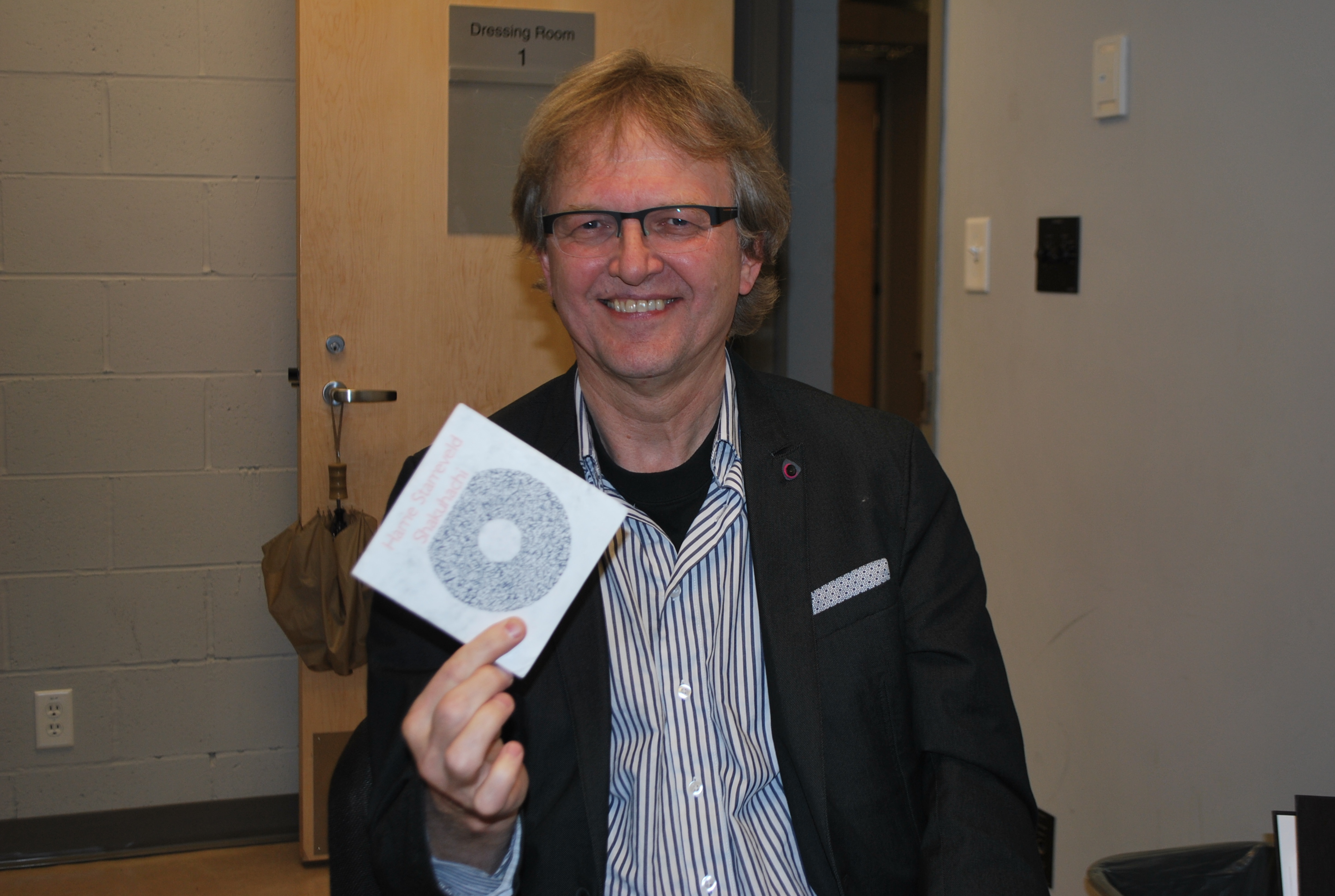
オランダからやって来た尺八の名人 ハリー・シュタレフェルトさん
ハリー・シュタレフェルトさんは「無理な楽譜はない」で有名な元ヘット・トリオ(1982-2006年)のメンバーで、フルートの巨匠。
世界のトップオーケストラのソロ、さらにクラシック音楽のグラミー賞ともいわれるエディソン賞の受賞者でもある。
現在Nieuw Ensembleやソロとして活躍中。近年もサントリーホールにて日本の指揮者や演奏家たちと共演している。
今回はVancouver Inter-Cultural Orchestra (VICO, http://www.vi-co.org)主催のLonging Skyに出演のため来加した。
尺八との出会い
学生時代に武満徹氏や福島和夫氏等日本の現代音楽を聞いて感動した。彼らの基本が日本の伝統的音楽だと知りすぐにレコードを購入した。琴や尺八がとても神秘的だったのでもっと知りたかった。尺八をテープから流して自分のフルートと合わせるコンサートも試みた。
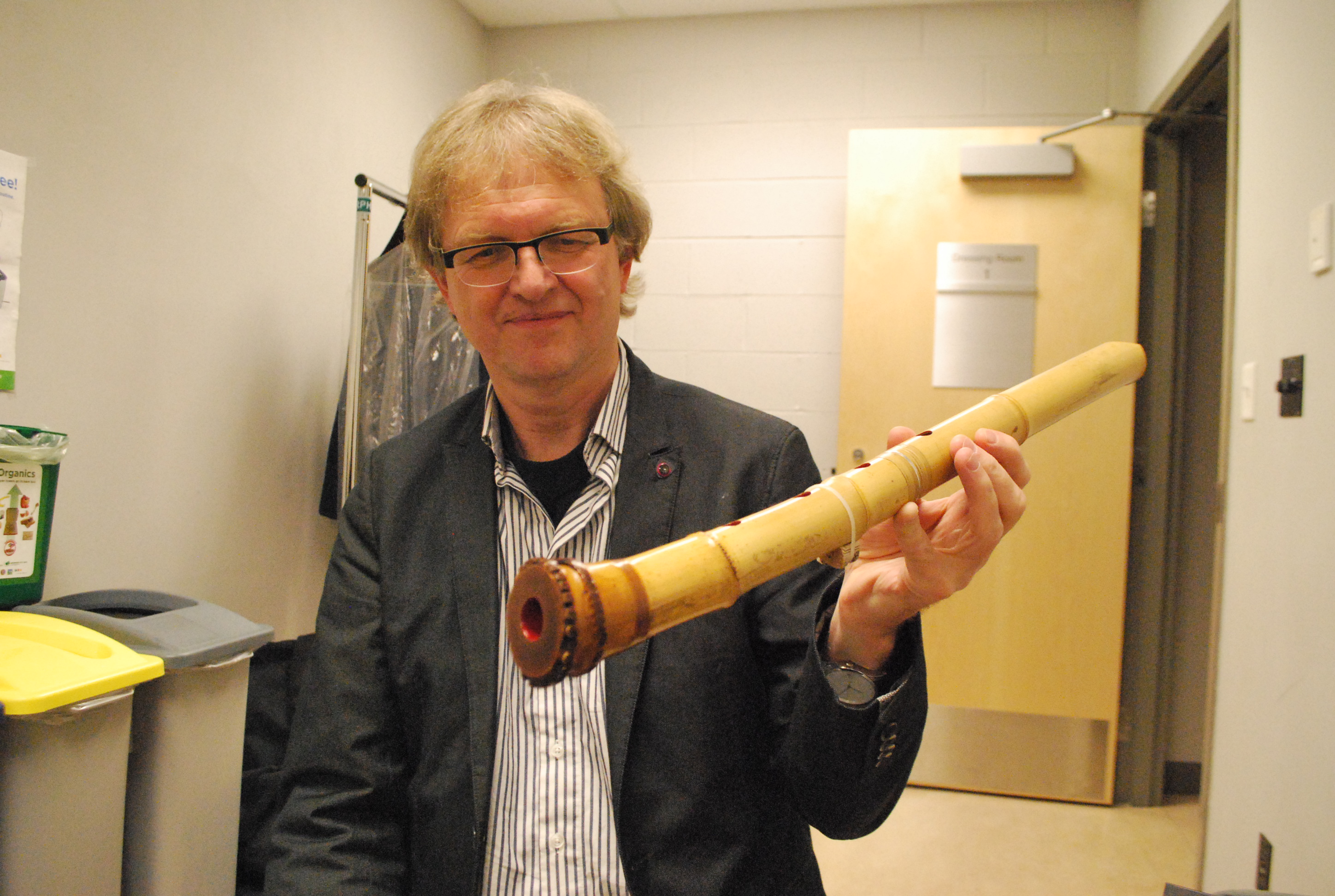
ハリーさんはアムステルダムとブレーメンの音楽院でフルートの教授をしている。ある日ドイツの学生が日本人から尺八を習っていると聞き興味を持った。それがハナダ師匠との出会いだった。禅に参加しながら後に明暗流尺八を習った。いきなり日本語の楽譜(写真)を見せられ、冗談だろうと思ったそうだ。しかし、過去にデザインの勉強もしていたので自然と目でおぼえられた。虚無僧のように(注:外見でなく)何もない状態で、心を空っぽにして練習した。尺八は人前では吹かず、自分だけの楽しみにとっておきたかった。しかし周りから何度も頼まれて、少しずつ回数が増えた。“首振り三年ころ八年”といわれるとおり、“ころころ”の技は彼のようなプロでも一年たっぷりかかった。
自分の中に日本人がいる
「僕の人生は『まぜこぜ』で自分でも時々わけがわからなくなるんだ」と笑うハリーさん。一人で聞くのはバロック音楽、教えるのはバッハ、モーツアルトなどのクラシック音楽、演奏はフルートが現代音楽、そして尺八は日本の伝統的音楽と幅広い。世界中を演奏旅行するが、何が仕事か趣味か自分の中で分けるのも難しい。そして昨年日本のチェリスト堤剛氏が来蘭した際、堤氏がハリーさんを見て実にアジア的だと驚いたという。「不思議だ。変な話だが、僕は自分の中に日本人を感じるんだ。日本文化に触れるとなぜか故郷を懐かしむ気持ちになる。大好きなんだ、サムライ、歴史…それともただの日本フリークかな?」
ヘット・トリオ時代とソロを合わせると彼のCDは総計40枚以上になる。もうCDは作らないと思ったがまた作りたくなった。生徒の一人が“シャクハリ”と冗談で言ったのがきっかけとなった。「ほら、まぜこぜ」と見せてくれたジャケットは彼のオリジナルで、曲も笛も種類が西洋からトルコ、日本までと多様であった。
今回の公演は尺八から始まった。尺八を片手に登場した彼は直立で背筋が伸びていた。“むら息”(わざと荒い音を出す)も見事で、うつむく雰囲気も全く日本人と変わらなかった。しかし後半、フルートを持って歩く彼はまるで別人のようだった。くずした体が大きく見え指先がとても軽やか。金色に光るフルートと髪の色が同じでヨーロッパを感じさせた。彼は楽器に合わせて容姿と性格が変わるのか? それとも尺八を吹く時だけ日本人になるのか? どちらにしても日本の尺八を世界に広めてくれるシャクハリさんことハリー・シュタレフェルトさんに拍手をおくりたい。
ENGLISH VERSION
~Meeting “Shakuhari”san~ Shakuhachi Virtuoso from Holland
Mr. Harrie Starreveld is a member of the former Het Trio(1982-2006, famous for ‘no impossible scores’), a master of flute, a soloist in world’s top orchestras, and the winner of the Edison Award (like a Grammy in classical music). He is now working as a solo and in Nieuw Ensemble. In recent years he played with the Japanese top conductors and musicians at the Suntory Hall. This time he came to Vancouver to join “Longing Sky” by the Vancouver Inter-Cultural Orchestra (VICO, http://www.vi-co.org).
Encounter With Shakuhachi
When he was a student, he listened to Japanese contemporary music like Toru Takemitsu and Kazuo Fukushima. He learned that they based their compositions on Japanese traditional music so he bought a record. Instruments like Koto and Shakuhachi were so mysterious he wanted to know more. He even played his flute with a recording of Shakuhachi in concert. Harrie is a professor at Conservatories in Amsterdam and Bremen. One of his German students said he learned Shakuhachi from a Japanese man. That was his first encounter with his teacher Hanada. He attended Zen practice and learned Myoan-ryu Shakuhachi. When the teacher presented the Japanese score (as in the photo), he thought it was a joke. However, since he also studied design in the past, he could follow the score. Like Komuso monks (note: not appearance), with nothing and emptiness in mind, he practiced. He did not want to play Shakuhachi in front of others and preferred to play for his own enjoyment. However, people around him started asking him to perform, so he did. Like the Japanese proverb says, “Swing (neck) 3 years, Koro 8 years” Korokoro took a year to master, even a professional like him.
Japanese Inside Me
“My life is all mixed-up and sometimes I am confused” smiles Harrie. He listens to Baroque, teaches classical music like Bach and Mozart, plays contemporary (flute) and Japanese traditional (Shakuhachi). He travels all over the world and has a hard time separating jobs and passion. Last year, when a Japanese cellist Mr. Tsuyoshi Tsutsumi came to Amsterdam, he looked at Harrie and astonished about Harrie being so Asian. “I wonder… It may sound very strange, but I feel Japanese inside. When I touch Japanese culture I feel at home… I like Samurai, history… Or am I just a Japan freak?” He has made 40+ CDs combining his solo and Het Trio. He thought he would not make CDs anymore, but he changed his mind. It started when one of his students called him “Shakuhari” jokingly. “Here is another mixed-up” and he showed me a brand new CD, with his original jacket cover, with a variety of songs and flutes of different cultures from western, Turkish to Japan. Tonight’s performance started with Shakuhachi. When he appeared holding it, he stood so straight. His “Muraiki” (purposely blowing rough) was splendid. From the way he looked down modestly, he was not different from any Japanese. However, after the break, when Harrie came back with his flute, he looked very different. He sat loosely, looked taller, and his fingers moved very lightly. The shining gold of flute matched with his hair, and looked very European. Does he change his appearance and character according to his instruments, or does he transform to a Japanese only when he plays Shakuhachi? Either way, let us applaud Mr. Harrie Starreveld or Shakuhari-san who spreads Japanese Shakuhachi to the world.
 MovieGa 素敵な映画人